
When Prince Christian walked into his 18th birthday gala, he wore a fancy new piece of royal history: the Order of the Elephant.
The Order of the Elephant is Denmark’s oldest and most distinguished order of chivalry. It is used to honour foreign members of state or other royals and has links back to the 15th century. As of the date of this writing, Queen Margrethe II is the head of Danish royal orders of chivalry, but that will be changing this Sunday, January 14th when Crown Prince Frederik is proclaimed King.
In or around 1460, King Christian I founded the Fellowship of the Mother of God, which was a Danish confraternity, which is a group of voluntary members that promotes Christian ideas of piety and charity, with the approval of the Church (I had to look this up). The badge for this group was a depiction of the Virgin Mary holding Jesus, which connected to a collar made of links in the shape of elephants.
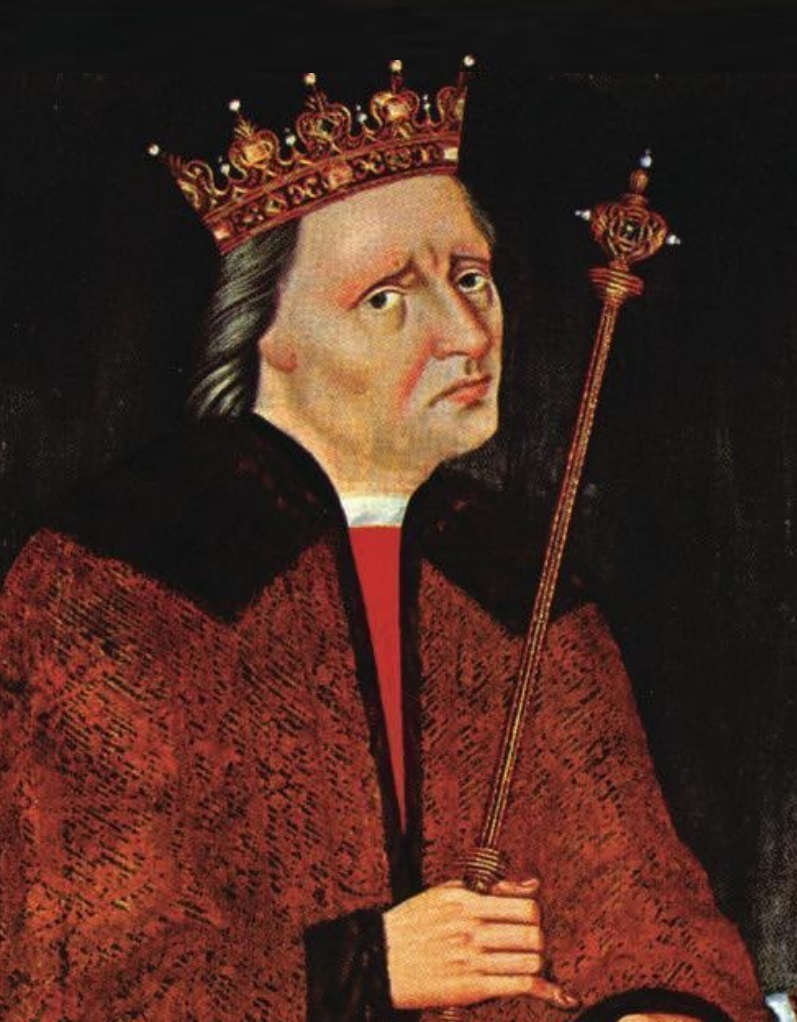
The group lasted for a decent amount of time but had largely faded away by the Reformation in 1536. It wasn’t until 1580 when King Frederik II brought it back into use although in a slightly different form: just an elephant was used as the order’s badge and symbol.
It wasn’t until 1693 that there were actual written down, established statutes laid out for the order. King Christian V set out that there was only one class of the order (some orders have first, second, or third classes, sort of like ranks in a hierarchy), and that this order would consist of only thirty knights as well as the Grand Master, a.k.a, himself, the King, and his sons. There have obviously been some tweaks made, but overall, the statutes Christian V laid out are still valid and in place, although it wasn’t until the 1950’s that they were amended to include women in the order as well.
There have been around 890 orders presented since 1580. While there are some orders out there that are presented to regular people like you and me, the Order of the Elephant is reserved for royalty and foreign heads of state. However, there was one exception made for the Danish shipping magnate Mærsk Mc-Kinney Møller, who, although he was not royal or a head of state, he was at one point the wealthiest man in Denmark, so.
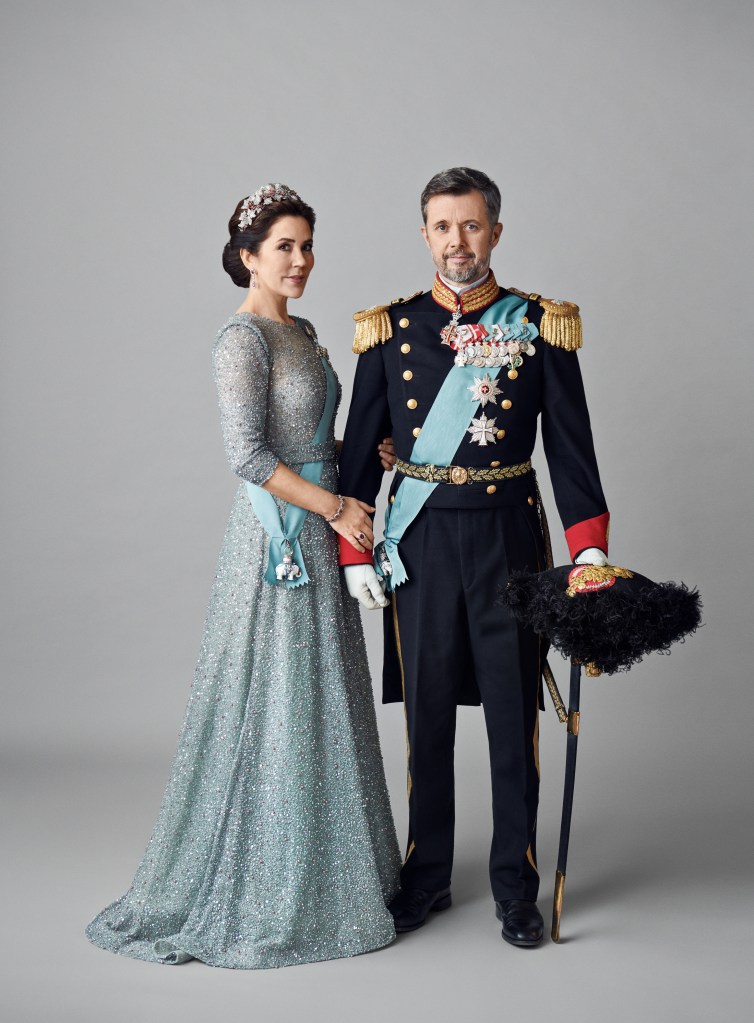
Embed from Getty ImagesThere are a few pieces that are worn with this order: a sash, a collar, the elephant itself, and a star badge. Most often, the Order of the Elephant is worn on a light blue sash that goes from left shoulder to right hip. The star badge is worn on the left side of the body. However, there are certain days when the order is worn suspended by a collar of towers and elephants (more on that in a minute).
Embed from Getty ImagesOne of those days is New Years Day, or Knights Day. The Danish royals gather for a sparkling evening gala dinner wearing the order specifically on it’s collar. Other days for when the order is presented this way are the sovereign’s birthday and June 28th, for the birthday of Valdemar the Victorious. The way the order is worn and when the collar is used was dictated by King Christian V in the statutes from 1693.
So why an elephant in the first place?

The Danish royal family site states that:
No valid explanation can be found in the Order of the Elephant’s statutes or other available material as to why the elephant gained foothold as a symbol in a Danish order.
However, they do indicate that the order of the elephant uses an elephant because the Fellowship of the Mother of God also used an elephant all the way back in 1460. By using the same symbol, the two orders were able to be linked historically which gave the Order of the Elephant an established base and also gave the impression of a much older and impressive age.
So while the family site states that there has been no valid explanation for why an elephant has been used for so long as a symbol in a Danish order, it’s been proposed that because the Danes had active colonies in India, they would have been familiar with the visual of an elephant and howdah, which is a carriage placed on the back of an elephant or camel. The order contains a tower resembling more of a castle to be sure, but the mahout, or rider, remains on the elephant.
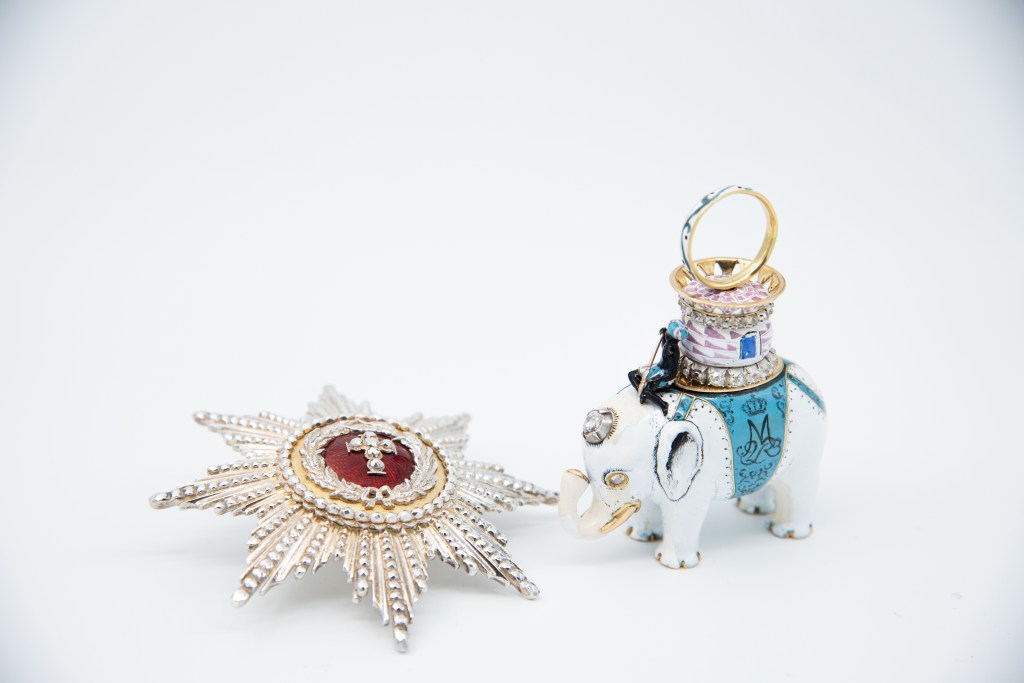
Normally, when the recipient of the Order of the Elephant passes away, the order is returned to the Crown and the pieces are reused for new members. The newest recipients of the order are the King and Queen of Spain, and the orders they received belonged to previous knights of the Order of the Elephant, but it’s unknown who exactly.
When Prince Christian turned 18, he received the insignia from his late grandfather, Prince Henrik. You can see the monogram of Queen Margrethe II on the side of the elephant; that was redone for Christian. The elephant will be marked by the sovereign that presented the order, so Henrik’s elephant previously had the monogram of King Fredrik IX.
The Danish royals are pretty good about giving out official portraits. So, unless they go rogue and present casual photos of the future King and Queen after the proclamation on the 14th, I can safely say that Mary and Frederik will be wearing the order in their portraits.


 The Royalty Nerd
Leave a comment